Saturday, March 06, 2021

Calling Out / Calling In

This week, the forces for white supremacy were besides themselves with indignant rage at cancel culture at work in eliminating the gender from Potato Head and the casual racism of Dr. Seuss.

The same week, I participated in a Lunch and Learn about Intercultural Communication where the instructor taught that if we ever faltered in how to handle microaggressions, we were to just think of them as sexual assault and handle them that way. The perpetrator was to be banished. The victim was to be believed and supported. End of story.

As a white person who freely admits that I have been steeped in and shaped by white supremacist culture, I know that I have been guilty of casual racism, implicit bias, subtle acts of exclusion, and unjustifiable ignorance. I acknowledge that I must work to stay awake, stay aware, learning and growing and listening. 

And I do not believe that microaggressions are only perpetrated by white people. If you accept intersectionality of power and oppression, you acknowledge that it's a one-up, one-down game in all directions and at all levels. 

And if you accept that, then you must know that despite all our best efforts, mistakes and slip-ups and gaps in knowledge, skill, and grace are inevitable. And "punishment" for microaggressions is not just short-sighted but woefully inadequate for the ocean of water that we all have to carry to get from where we are to a world in which we resolve conflicts with peaceful resolution. What's peaceful about treating a microaggressor as a perpetrator of sexual assault? 

I am a Universalist Unitarian, and the first part of my faith history is a heretical belief - at the time but also now - that every human being is worthy of salvation. That we are all redeemable. As Ruby Sales put it in her interview with Kristen Tippet in the podcast On Being:

This whole business of demonization, I’ve been deeply concerned about it, because it does not locate the good in people. It gives up on people. And you see that most especially in the right and the left. I have been very concerned about the demonization that comes out of right-wing communities and also the demonization that I’ve heard on the left. And it comes from the same source of displaced whiteness. So I think that there is, at the heart of this business of finding something good in people and not giving up on anyone and not writing anyone’s obituary until they no longer have breath in their bodies, is very problematic today. And I have had deep problems with the anger, the vitriolic rage that has come out of the right and the left — and I never thought I would say this — and the only safe landing space seems to be in the middle. [laughs] And I think we should really think about that. I do believe that we’re witnessing something that we need to pay real attention to.

She entreats us to ask "Where does it hurt?" when people are acting poorly, acknowledging that bad choices are born of pain, hurting, feeling like no other option is available. She alludes to white grievance feeling like white culture is under attack, that to be white is to be racist, to be irredeemable, to be flawed, to be bad.

To say that white supremacy culture leads white people to walk around harming others by denying their own cultural centers is not to say that whiteness is bad. It is to say that white supremacy is bad. And that actions and words and inaction and silence that reinforces white supremacy is bad. The difference between guilt - I have done a bad thing - and shame - I am bad.

But to let go of shame is to let go of the excuse that because I cannot shed whiteness, I have no way of doing better. And those who support and defend white centered culture want no part of any path that would hold them to doing better.

But the admonition that anyone who perpetrates a microaggression is akin to a rapist also narrows the paths toward reconciliation. Where is the island big enough for all the misfit toys? Hint: It's all the continents of the world.

And so if we say that all people are made up of intersectional identities, and each is connected to cultures, we must also say that because we are constantly communicating across cultures, miscommunication is to be expected and mistakes large and small will be commonplace. And therefore our work to be in right relationship, in Beloved Community of acceptance and celebration, must be the work of openness to learning and affirming and repair and reconciliation when harm occurs. 

(Is my feeling of urgency to get to learning skills of conflict resolution and reconciliation and repair a way of skipping past the acknowledgment of the need to learn and do better? Or, rather, is it side-stepping the instinct to not do better until I "learn enough" - a trap of inaction because there is an never-ending amount to learn?)

I want a "how to have hard conversations when you've screwed up" course. Or a "how to call in when someone's screwed up" workshop. I want more models of mama love - the image of a wolf nipping at her cubs when they get out of line but mostly letting them learn their own lessons through play with their littermates. 

Rabbi Danya Ruttenberg gets at this new culture where mistake and repair is normalized and de-stigmatized when she offers this language, with a laugh, in an recent podcast with author Ijeoma Oluo, "You could just say: I did a racism, didn't I?" and then use the Jewish tradition of atonement as a model for how to get back into right relationship. 

Rabbi Ruttenberg responds to Amy Cooper's sorry-not-sorry apology after calling the police on a black man when she broke the law:

She will not own that she DID a racism -- she could not possibly have DONE a racism, because that means she IS racist. ... Rather than, for example, saying something like, "I did something that was racist and I commit to educating myself to better understand why what I did was so harmful and to make better choices in the future." Something that would involve owning harm, working to change, and, I might add, offering amends of some sort to Christian Cooper. ... I don't believe that people cannot learn and grow and choose different actions. But that work demands taking full responsibility for the harm caused -- including amends and a real apology to the harmed parties -- and taking steps to become different (which could involve things like therapy, education, etc.) 

Rather than acknowledging, eg, that we all live in a white supremacist society and that it takes a lot of work to fight the messages that we have all internalized.

I would offer that a full apology to the person harmed is Plan A. But I'm remembering a sermon on forgiveness by the Rev. Angela Herrera in which an apology is perhaps more necessary to oneself. A moment of reflection and reckoning and re-orientation to be in right relationship with one's own values and a re-commitment to do better (and do what doing better will require, including therapy, education, etc.). Forgiveness involves 2 people but only requires 1 to act. 

And the reflection part includes Ruby Sales' question: Where is it hurting? What made you say or do or think or act or not say or not do or not think? (Seeing the water in which you swim. Reasserting your values. Re-orientation. Re-commitment.)

And the larger question of how to be in relationship with others, to be in community? It's a longer timeframe and more than 1:1 interactions. We should not only be focused on the success or failure of individual interactions and the quality of apology and atonement for 1 microaggression. The microaggressor may not be the right person to help heal the harm they caused, which is not to say that they shouldn't apologize, but rather to say that we all have a role in repair. That many hands make light work. That some harm can only be healed in community and over generations in the progress we make in dismantling systems of oppression. Which is not to let anyone off the hook for the responsibility to learn more so that we can individually do better, or to learn better how to apologize and repair/atone when we don't always do better. 

This is both/and. Individual interactions and the long arc of justice. The resilience of a tree, turning to grow in a new direction when the light is blocked from one side, as poet Jane Hirschfield writes in the poem "Optimism." Or, as Ruby Sales said, cultivating and embracing the love borne of redemptive anger ... that moves you to transformation and human up-building." (And fortifies you to hold others to account for their missteps.)

I'm thinking here of the usefulness of the wave/particle metaphor - that light acts both as a wave and a particle, depending on how you set up your equipment to study it. Our interactions are this way - a lesson at the level of 1:1 interactions as individual particles and on systemic levels when we look at interactions among intercultural communities and across generations. Both are true. Both are useful depending on the level you're working on. (Ah, William James, you so-and-so, teaching us that what's useful is what's true! I see you!)

"We are incomplete without knowing each other." Ruby Sales says. And because of our intersectional identities, there is an infinite web of cultures to know.

"Our job is to take care of one another. To fight for a world where everyone is safe, is free, is whole. All of us. In this together. That's it. That's the work. Don't ever forget it." - Rabbi Danya Ruttenberg

Sunday, February 28, 2021

Song - "It’s Only Love" by Crys Matthews


Words & Music by Crys Matthews

https://crysmatthews.com

Used by permission


Poem - Savior Machine - Tracy K. Smith

I spent two years not looking
Into the mirror in his office.
Talking, instead, into my hands
Or a pillow in my lap. Glancing up
Occasionally to let out a laugh.
Gradually it felt like a date with a friend,
Which meant it was time to end.

Two years later, I saw him walking
Up Jay Street into the sun. No jacket,
His face a little chapped from wind.
He looked like an ordinary man carrying
Shirts home from the laundry, smiling
About something his daughter had said
Earlier that morning. Back before

You existed to me, you were a theory.
Now I know everything: the words you hate.
Where you itch at night. In our hallway,
There are five photos of your dead wife.
This is what we mean by sharing a life. Still,
From time to time, I think of him watching me
From over the top of his glasses, or eating candy

From a jar. I remember thanking him each time
The session was done. But mostly what I see
Is a human hand reaching down to lift
A pebble from my tongue.

Prayer for 2/28/2021 - The Rev. Bob LaVallee

 
In this time of transition from anger, despair, and loneliness to one of hope and possibility, we pause to consider the ways that we have been hurt in the past year, the ways we were injured by witnessing things that we know to be wrong. As we consider what we have lost, may we acknowledge our wounds and take the time needed to heal. May we honor that process of becoming whole again, and from that return to our commitments to build a world of love and kindness.

May we pause to notice the ways that the world is beautiful. May we breathe in the possibilities of life and growth and laughter.

We give thanks for the gifts that we receive, large and small. Let us not consider whether we deserve them or not but simply bask in the grace of being here, being on earth, being together. 

Poem & Prayer: "There are lots of ways to stay alive" by Rev. Theresa Soto

There are lots of ways to stay alive.
You can wear soft clothes and focus on brushing your teeth and hydrating.
You can ask yourself what you need and not be mad when you don’t have an answer, only a shrug. You can breathe in.
And then, with care, you can also breathe out.
Taking the thing one single breath at a time.

You can give yourself a chance. Remember not only your mistakes, but also all the ways that you matter. From eyelash to shoelace, you matter. You matter when you are sad, when the world is heavy like wet laundry, dragging from your arms. You matter when you are angry and you use your teeth like welded prison bars to keep the words that might cause harm from escaping past your lips.

There are many ways to stay alive.

You can come, heart wrapped in several layers of foil, mashed into a plastic box with an ill-fitting lid, to a place where people say your name like it is good news.

You can fight your way toward freedom.

I recommend that you decline the option of struggling by yourself. The point is to get your life. There was this wise ruler who said once that by ourselves we are unprotected, but two people together can face the worst: [the failure, the heartbreak, the upending of worlds we hold in our hearts, and the secret shame that we will shed like the skin of a smooth snake, though it will take some time.] And with three people, you being one of them, you may find that eventually, all will be well.

Saturday, February 20, 2021

Poem - "When the world was ten years old he fell deep in love with Egypt" - Patricia Lockwood


Just as he fell in love with the dinosaurs,
just as he would fall in love with the moon—
no women in the world yet, he was only ten years old.
A ten-year-old is made of time,
the world had forever to learn about Egypt.
He entered encyclopedias and looted every fact of
them and when he had finished looting
there he broke into the Bible. He snuck
into his mother’s room and drew thick lines
around his eyes and those were the borders of Egypt.
He carefully wrote in stiff small birds,
he carefully wrote in coiled snakes,
he carefully wrote in flatfooted humans.
The ten-year-old world needed so much
privacy, he learned to draw the door-bolt
glyph and learned to make the sound
it made. I am an old white British man,
decided the ten-year-old world, I wear a round
lens on my right eye, the Day, and see only a blur
with my left eye, the Night. When the sun shone
on him it shone on Egypt, all the dark for a while
was the dark in the Pyramids, the left lung
of his body was the shape of Africa
and one single square breath in it Egypt.
They never found all the tombs, he knew.
Anyone might be buried in Egypt, thought the ten-year-old
world in love with it, I will send my wind down
into my valley, and my wind will uncover the doors
to the tombs, and I will go down myself inside them,
and shine light on all the faces, and light on the rooms
full of gold, and light on even the littlest pets, on the mice
and the beetles of the ten-year-old kings, and shine light
on even their littlest names.

Friday, February 19, 2021

Letter from the Porch - Wendi Moore Oneal


1:21 "I am manifesting protection..." Michaela Harrison

I am manifesting protection
There's a forcefield all around keeping me safe and whole
I am manifesting protection
There's a love inside that fortifies my soul

We are...
Ze is...
He is...
She is...
I am...

4:37 "By the water of Babylon..."

By the water of Babylon
Where we sat down
And where we wept
When we remember Zion

When they carried us away to captivity
And they required of us a song
How can we sing our holy songs
In a Strange land

So let the words the words of my mouth
And meditations of my heart
Be acceptable in thy sight
Oh v'ry

6:38 I am solid like a rock

I am solid like a rock
I am rooted like a tree
I am here
Standing tall
In my rightful place

9:00 "I sing to charge the air with my belief..."

10:40 "Let your little light shine, shine, shine"

Let your little light shine, shine, shine (x 2)
Because there may be somebody down in the valley trying to get home
So let your little light shine, shine, shine (x2)

13:34 I got a right to the tree of life (Call and response)

"Loude, Loude, I got a right, I got a right to the tree of life"
I done told you...
I got a right
I told you
I got a right
I told you
I got a right
I got a right to the tree of life

My mama said...
If they got...
When we got...
If we got...
The ground know...
Them birds say...


16:03 Amen

Amen
Freedom

18:50 "Spirituals come from times during enslavement. Freedom songs come from time after enslavement."

19:35 "Freedom over Me"

Oh Freedom
Oh Freedom
Oh Freedom over me
And before I'll be a slave
I'll be buried in my grave
And I'll fight for my right
To be free

21:41 We have been burned

We have been burned
Burned by the fire
And we are ashes
Ashes and smoke
But we will rise
Higher and higher
On the wings of compassion
Justice and hope

23:37 We are the children

We are the children
of the ones who would not die
We are the children
of the people who can fly
We are the children
of the ones who persevere
We are fearless
We are strong
And we're ready to carry on


Ira Glass quote - "all writing is mediocrity"

"The natural state of all writing is mediocrity. It's all tending toward mediocrity in the same way that all atoms are sort of dissipating out toward the expanse of the universe. Everything wants to be mediocre, so what it takes to make anything more than mediocre is such a fucking act of will."


http://www.avclub.com/articles/ira-glass,13841/

November 5, 2003

Monday, February 15, 2021

Ross Gay - Book of Flowers - Harvard talk


March 9, 2016

(12:37)

"I want to say and re-say to anyone who ask me, I do believe in gratitude ("flowers") as  a kind of discipline, an energizing and catalyzing, and potential collectivizing discipline. What I mean is that, when I'm thinking of gratitude, or the gratitude I'm thinking of, is the ways we make each other possible. And that gratitude makes me more interested in making people possible, myself included.

...

(14:28)

If there's anything that's interesting to me about the poems, it's that they are motivated by precisely the desire to reach across, which is exactly what metaphor means, after all. Have you seen the moving trucks in Greece emblazoned with the word metaphores? My poems would be stupid little things to me, if they didn't reach your way. Who has the time?

...

(24:39)

I'm resisting your question about resistance, looks like. But I'm not really resisting; truth is, I'm making an argument. I'm making my argument with my body and the ground, about our bodies and the ground. 

...

(28:30)

How you see or what you see depends on the ground. You cannot engrave, in other words, you cannot cannot dig, in other words, you cannot prepare the earth for your body, without a proper and true ground. Maybe this book of flowers is a preparation for the ground I wish to enter.

...

(28:55)

... I'm talking about the ground, what holds us, what we walk on, what we fall onto, what we leap from, what holds us, the ground.

Or in a painting that against which the marks are made in a Franz Kline painting, the big industrial swipes of black arguing with or emerging from or even resisting the creamy surfaces, gestures legible because of the ground, dependent upon the ground, or better yet a Glen Ligon painting, the Zora Neale Hurston quote ad black text on a white surface: "I feel most colored when I'm thrown against a sharp white background."

...

(28:34)

I'm really curious about the ground of our imaginations and the ground that it is implied or assumed by the word resistance in the context of your question... about this book. "What are you resisting in your book about flowers, black man?"

...

(30:00)

What I hope I'm doing actually is imagining a ground different than the one the question presumes. Because the ground that question presumes is something I refuse to abide. On that ground, which is simply descriptive of an America, which is for the record, like everything fleeting. Let's call it an American ground, in which, for which, upon which black people are not actually people.  And sometimes it feels that if an America grants that if we are people, that it also imagines that our natural condition is pain, is suffering, is turmoil, is indignity, is death. It's big business, our suffering, our death. 

... 

(30:55)

Sometimes it seems to me that a black person becomes more legible in this particular American ground the closer they are to being dead. ... 

(31:09)

That is the ground. I hear myself say it among friends, so I'll say it to you right now, that they would like us to believe it. They would like us to believe, I sometimes believe, watching Walter Scott being shot again and again on the news, when any child can see... watching Tamir Rice be murdered again and again that our natural state, our natural condition, our ground is pain, if not death. ... 

(31:54)

Let's call that an American imaginative ground. ... A foundational American imaginative ground. ... I don't believe in it as a ground. And consequently I don't believe in it as something to be resisted. I just believe it's a persistent and abhorrent disruption to the actual ground, the actual ground being what I hope my book, a black man's book of flowers might look at. ... 

(32:36)

I'm a flower in your garden being planted around your garden, a fervent and raucous mint. 

So what's the ground? Our necessary lives or our lives necessary. And in our lives are so many things -- loss, sorrow, violence, pain, yes, but also delight, silliness, raucous laughter, care, care, as I see it, above all. Love, as I see it, above all. A thousand, thousand undocumented instances in my life alone of how I've been loved and cared for, lives that have seen my life and thereby made it possible. Lives, life, which has made our lives possible. 

(33:18)

[Reads "A Small Needful Fact"]

(34:00)

Celebration, exultation, praise, gratitude, and the rigorous practice, the rigorous public practice of those things is one of the ways we remind ourselves that our lives are the ground, that living is the ground. Those things remind us that being murdered and fucked over and terrorized is an aberration and to announce to the state or our shared consciousness or a broken American imagination by hollering with the light at our utterly necessary lives, our beautiful, beautiful necessary lives, that we are in fact meant to live. 

So ... this book about flowers by a black man ... was both utterly conscious -- I knew what I was and wasn't saying -- and what, perhaps, I'm expected to be saying -- and it was just me minding my business, talking about my life, my life."

(35:32)

[Reads "A Catalog of Unabashed Gratitude"]


Which ends..

I want so badly to rub the sponge of gratitude
over every last thing, including you, which, yes, awkward,
the suds in your ear and armpit, the little sparkling gems
slipping into your eye. Soon it will be over,

which is precisely what the child in my dream said,
holding my hand, pointing at the roiling sea and the sky
hurtling our way like so many buffalo,
who said it’s much worse than we think,
and sooner; to whom I said
no duh child in my dreams, what do you think
this singing and shuddering is,
what this screaming and reaching and dancing
and crying is, other than loving
what every second goes away?
Goodbye, I mean to say.
And thank you. Every day.


Sunday, January 31, 2021

Clean pain / dirty pain - Resmaa Menakem

 Article for prison justice:

Building on Resmaa’s framing, I have been also thinking about power. It seems that power can show up as clean or dirty, as well. For example, when we believe that you having power or voice means that mine is silenced or that power is a zero-sum game, I think we are acting from dirty power.
 
But, when we see that power can grow across communities, that it can be a source of community transformation and well-being, and that we are all stronger when we see, hear, and find solidarity with each other, I believe we are acting into clean power.

Podcast - University of Arizona, College of Social & Behavioral Sciences, Center for Compassion Studies

Resmaa: There’s a white spoken word artist that I heard the other day, and he said something else that made my brain kinda go ‘click!’ and go ‘yeah, that's it!’ One of the things that he says is that when it comes to white people, and he’s talking about his own people, when it comes to white people, it’s important to realize that white body supremacy is the water, not the shark.

And many times progressives are always looking for the Trump shark, or the KKK shark, or the Mike Pence shark, right, they're looking for the shark, right, but not the fact that they are steeped in the water. And when white progressives put themselves on this continuum of, you got Trump’s over there and you got ‘good’ white people over here, what is happening is they forget that that continuum that they're on, the one that says they’re a good one is actually a sliding continuum.

It is not a fixed continuum. It slides. And when white progressives...this is something that Jim White has been saying lately, is that progressive white supremacy is as damaging as devout white supremacy. What I mean by devout white supremacy is that those who are so dedicated and devout to the destruction of people of color. Those are the devout ones, right? But the progressive ones, that insidious type of white body supremacy...that even though they say they don’t believe in white body supremacy, they are steeped in white body supremacy and those notions of who black people are in relation to who they are is still steeped in white body supremacy.

And if that goes unexamined, they continue to wound people of color, and then feign...and then won’t take responsibility for that wounding. So part of it for me is that when it comes to healing this thing about white body supremacy, white bodies have to begin to get together to figure out how they’re gonna create a container, a cultural container by which they can begin to develop culture to begin to actually attack it.

White body supremacy...the abolishment of white body supremacy, currently as it stands...white people have no notion how to begin to deal with that culturally. They have a notion around segregation. They have a notion around assimilation. They have no notion around abolishing white body supremacy, or racism, or anti-racist things. They have strategy around it, but not culture.

The KKK, the devout racists, have a culture. They have symbols, they have colors, they have music, they have dance, ways of speaking, ways of standing, ways of being, all that different type of stuff. What does the white liberal have other than strategy and a racial resume, right? And if I’m a fourteen year-old white boy, having music and symbols and a shared historical understanding, even if I know that the shared historical understanding is abhorrent, I still have something that speaks to me more so than picketing, and sitting around, you know, something that I’m protesting. That does not sustain culture. And until white liberals begin to actually develop a culture around anti-racist, abolishing, somatically abolishing white body supremacy, until they begin to think about this as a culture and less about this as a strategy, they will continue to re-wound people of color.

Poem - The Last Move - Ada Limón

from Bright Dead Things


It was only months when it felt like I had been
washing the dishes forever.

Hardwood planks under the feet, a cord to the sky.
What is it to go to a We from an I?

Each time he left for an errand, the walls
would squeeze me in. I cried over the nonexistent bathmat, wet
floor of him,
how south we were, far away in the outskirts.

(All the new bugs.)

I put my apron on as a joke and waltzed around carrying
a zucchini like a child.

This is Kentucky, not New York, and I am not important.

This was before we got the dog even, and before I trusted
the paralyzing tranquilizer of love stuck
in the flesh of my neck.

Back home, in my apartment, another woman lived there.
In Brooklyn, by the deli, where everything
was clean and contained.

(Where I grieved my deaths.)

I took to my hands and knees. I was thinking about the novel
I was writing. The great heavy chest of live animals
I had been dragging around for years; what’s life?

I made the house so clean (shine and shine and shine).

I was suspicious of the monkey sounds of Kentucky’s birds,
judging crackles, rusty mailbox, spiders in the magnolia tree,
tornado talk, dead June bugs like pinto beans.

Somewhere I had heard that, after noting the lack
of water pressure in an old hotel in Los Angeles,
they found a woman’s body at the bottom
of the cistern.

Imagine, just thinking the water was low, just wanting
to take a shower.

After that, when the water would act weird,
spurt, or gurgle, I’d imagine a body, a woman, a me
just years ago, freely single, happily unaccounted for,
at the lowest curve of the water tower.

Yes, and over and over,
I’d press her limbs down with a long pole
until she was still.

Poem - Hermit Thrush - Donika Kelly


We never knew winter before this. 
Winter where none of the trees lose 
their needles, 
where ice creaks the limb, 
and the hermit thrush forages for insects 
on the forest floor. Winter where, 
finally, the white girls, after a long, 
long summer of bronze and muscle and shine, 
cover their legs. Winter, where we can finally feel 
beautiful, too. 
We say we. 
I mean I. 
When they cover their legs, 
I can feel beautiful, too.

Friday, January 29, 2021

On Being with Ross Gay


On Being with Ross Gay


Tippett: I wanted to talk to you about justice and how you grapple with that reality, that aspiration, that concept. And there has been an evolution of that. You have brought together the idea of longing for justice and working for justice with also exalting the beautiful and tending to what one loves, as much as what one must fight.

Gay: Tending to what one loves feels like the crux. And I’m very confused about justice, I think. I feel like the way we think of justice is absolutely inadequate, often. Often. Not everyone. And I am curious about a notion of justice that is in the process of exalting what it loves.

Tippett: So here’s something you wrote somewhere. You said, 
“I often think the gap in our speaking about and for justice, or working for justice, is that we forget to advocate for what we love, for what we find beautiful and necessary. We are good at fighting, but imagining, and holding in one’s imagination what is wonderful and to be adored and preserved and exalted is harder for us, it seems.”


Gay: I also think that there’s a part of our bodies that are wired — and this is a thing that I noticed, that when I would experience something delightful, and sometimes I’d be like, “Oh, that’s wonderful” — so often, I’d be like, “I want to tell you.” It is this thing that actually makes me reach out towards someone.

And that feels bodily. I don’t know if a scientist has found this out yet, but when something good happens, do we gather around a thing? It is a feeling that I have, a deep feeling that I have, and I feel like it’s something that I witness, too, that people kind of want to share the stuff that they love.

Tippett: There’s this famous line from Cornel West, that justice is love made public.


[Reading and talk: What's the difference between exuberance (commitment to wonder) and earnestness (too tight fastness to rube-like wonder) when reading the essay about the meanings of "touched"]

Tuesday, January 26, 2021

Poem - Silent friend of many distances / Let this Darkness Be a Bell Tower / Sonnets to Orpheus II, 29 - Rainer Maria Rilke


Silent friend of many distances, feel
how your breath enlarges all of space.
Let your presence ring out like a bell
into the night. What feeds upon your face

grows mighty from the nourishment thus offered.
Move through transformation, out and in.
What is the deepest loss that you have suffered?
If drinking is bitter, change yourself to wine.

In this immeasurable darkness, be the power
that rounds your senses in their magic ring,
the sense of their mysterious encounter.

And if the earthly no longer knows your name,
whisper to the silent earth: I’m flowing.
To the flashing water say: I am.

Translated by Stephen Mitchell


Let This Darkness Be a Bell Tower


Quiet friend who has come so far,

feel how your breathing makes more space around you.
Let this darkness be a bell tower
and you the bell. As you ring,

what batters you becomes your strength.
Move back and forth into the change.
What is it like, such intensity of pain?
If the drink is bitter, turn yourself to wine.

In this uncontainable night,
be the mystery at the crossroads of your senses,
the meaning discovered there.

And if the world has ceased to hear you,
say to the silent earth: I flow.
To the rushing water, speak: I am.


Translated by Joanna Macy

Monday, January 18, 2021

Poem - To Gabriella at the Donkey Sanctuary - Mary Szybist


All morning I’ve thought of you feeding donkeys in the Spanish sun—Donkey Petra, old and full of cancer. Blind Ruby who, you say, loves carrots and takes a long time to eat them. Silver the beautiful horse with the sunken spine who was ridden too young for too long and then abandoned. And the head-butting goat who turned down your delicious kiwi so afterward you wondered why you hadn’t eaten it.

Here I feed only the unimpressed cats who go out in search of something better. Outside, the solitaires are singing their metallic songs, warning off other birds. Having to come down from the mountain this time of year just to pick at the picked-over trees must craze them a little. I can hear it in their shrill, emphatic notes, a kind of no, no in the undertone.

Gabriela-flown-off-to-save-the-donkeys, it’s three hours past dawn. All I’ve done is read the paper and watch the overcast sky gradually lighten. Breaking news from the West: last night it snowed. A man, drunk, tied a yellow inner-tube to his pickup, whistled to his daughter, and drove in circles, dragging her wildly behind…

I know. But to who else can I write of all the things I should not write? I’m afraid I’ve become one of those childless women who reads too much about the deaths of children. Of the local woman who lured the girl to her house, then cut the baby out of her. Of the mother who threw her children off the bridge, not a half-mile from where I sleep.

It’s not enough to say the heart wants what it wants. I think of the ravine, the side dark with pines where we lounged through summer days, waiting for something to happen; and of the nights, walking the long way home, the stars so close they seemed to crown us. Once, I asked for your favorite feeling. You said hunger. It felt true then. It was as if we took the bit and bridle from our mouths. From that moment I told myself it was the not yet that I wanted, the moving, the toward—

“Be it done unto me,” we used to say, hoping to be called by the right god. Isn’t that why we liked the story of how every two thousand years, a god descends. Leda’s pitiless swan. Then Gabriel announcing the new god and his kingdom of lambs—and now? What slouches

toward us? I think I see annunciations everywhere: blackbirds fall out of the sky, trees lift their feathery branches, a girl in an out-sized yellow halo speeds toward—

I picture her last moments, the pickup pulling faster, pulling rougher, kicking up its tracks in the slush: she’s nestled into that golden circle, sliding toward the edge of the closed-off field—

I am looking at the postcard of Anunciación, the one you sent from Córdoba in the spring. I taped it to the refrigerator next to the grocery list because I wanted to think of you, and because I liked its promise: a world where a girl has only to say yes and heaven opens. But now all I see is a bright innertube pillowing behind her head. All I see is a girl being crushed inside a halo that does not save her.

This is what it’s like to be alive without you here: some fall out of the world. I fall back into what I was. Days go by when I do nothing but underline the damp edge of myself.

What I want is what I’ve always wanted. What I want is to be changed.

Sometimes I half think I’m still a girl beside you—stretched out in the ravine or slouched in the church pews, looking up at the angel and girl in the colored glass, the ruby and sapphire bits lit up inside them. Our scene. All we did was slip from their halos—

Which is to say, mi corazón, drink up the sunlight you can and stop feeding the good fruit to the goat. Tell me you believe the world is made of more than all its stupid, stubborn, small refusals, that anything, everything is still possible. I wait for word here where the snow is falling, the solitaires are calling, and I am, as always, your M.

The Path (Poem) by Lynn Ungar


Life, the saying goes, is a journey,
and who could argue with that?
We’ve all experienced the surprising turns,
the nearly-impassible swamp, the meadow
of flowers that turned out not to be quite
so blissful and benign as we first thought,
the crest of the hill where the road
smoothed out and sloped toward home.

Our job, we say, is to remain faithful
to the path before us. Which is an assumption
as common as it is absurd.
Really? Look ahead. What do you see?
If there is a path marked out in front of you
it was almost certainly laid down for someone else.

The path only unfolds behind us,
our steps themselves laying down the road.
You can look back and see the sign posts—
the ones you followed and the ones you missed—
but there are no markers for what lies ahead.

You can tell the story of how
you forded the stream or got lost
on the short cut that wasn’t,
how you trekked your way to courage or a heart,
but all of that comes after the fact.

There is no road ahead.
There is only the walking,
the tales we weave of our adventures,
and the songs we sing
to call our companions on.

By Lynn Ungar 7-27-17

Song - What Must Be Done - Greg Greenway


 I learned as a child there are two ways to see

The world as it is and the way it could be
Some people say that's just not my problem
Some people do what must be done
They see the hole in the fabric that must be sewn
They see the way blockaded and they roll back the stone
They see the day beyond the horizon
And they do what must be done

Chorus:

Some people do, do, do, what must be done
They do what must be done
They see the way beyond the horizon

And they do what must be done


I've seen the toll taken, the tears that were shed
I've seen the journey started and the ripples spread
Some people say that's just not my problem
Some people do what must be done...
They see the hole in the fabric that must be sewn
They see the way blockaded and they roll back the stone
They see the day beyond the horizon
And they do what must be done...

Sometimes the darkness is all we can see
We can’t envision what the future will be
But in our hearts is that which can guide us
So we can do what must be done...

We see the hole in the fabric that must be sewn
We see the way blockaded and we roll back the stone
We see the day beyond the horizon
And we do what must be done...

words & music by Greg Greenway (formerly of Brother Son). Last verse by Trevanna Grenfell

Say It (poem) by Ross Gay


If I told you we were slapping the beat to some
Barry White jam crooning from the boombox
and that every single one of us at one point or another
jumped up to shake what shook on us and there were lines of us
in step and a loon in every one of our mouths who knew
and one of us in his pressed shirt dancing his dead father’s
hunchbacked smooth another singing back up like hers
and another shaking his head no but meaning yes,
oh yes—and if I told you the proprietor of this roti joint
dragged his wife from the kitchen where she was busy
currying chana for the best doubles in Brooklyn
so she too might witness this unabashed racket, this stampede
of glee and goof, this clan of black clad—and if I told you
today we laid down one too young
to lay down:
praise the body its miraculous
stutter and thrum. Praise its slosh and drag and drone
and every particulate diving toward the dirt.
The rampant heart its last kick and holler. The blood
clot’s last long swim to the lung. Praise the lung
its last whistle, and the kidney’s no more—
say this; say praise
the machine hiss your father became
and the quick way he gave it up; say
praise the liver’s dread swell.
Say it again. Say it with your heart and neck
and lent throat gaped and flayed
to the sky. Say it covering someone’s hand
with yours, straightening your tie. Say it
to the earth’s fat mouth. Say it the way
you can turn on your heel to spark fire and make
your limber hip twist like a lesser storm,
or the way there is a storm between
your two good hips which are good
good music if you listen;
say it in your polished shoes,
to the organist say it too; praise the heart
its rivers and each rope twisted in the body,
and every bird housed in the body:
vulture, gull, raven, jackrabbit, cask
wick and flame a bird too; say
praise to flame a bird too; praise to the nerve
endings in your teeth, and to your tongue
like a blind man’s hand reading
her teeth, and the tongue inside the eyes,
and the nose in the tongue and the heart
in the tongue; say praise to salt,
tear, stain, and skin ripped apart
like a kite flipping in the wind, praise
the rip in the kite and the geese flying through it, praise
the wings you swore you had
when you were six years old and the wings
that remain today; praise
every flower you never smelled
and every dog you never kissed, and the skinny farmer
at the market with bad teeth who gave you
his last cantaloupe and peppers and snap peas who
you never kissed, praise the handful of freckles
dashed across your father’s face that you never
kissed until he would not wake again; say it;
say it again; say praise the sunlight
trapped on your father’s face
and the body’s slapdash racket
slipping away
if you want to or not
clean the dirt from your teeth and the glass
from your fists if you want to or not
tie both your shoes and fix your suspenders
and praise
the heart inside the heart
cracking its shackles, its thunderclap
shrug, its two thousand dolphins waving
goodbye. Praise, every day, the two thousand
dolphins waving goodbye. Shaking off
our hearts and waving goodbye.

Monday, January 11, 2021

Writing prompts


  • Catalogue of unending gratitude
  • Poem in a sun shape
  • Letter about what you learned. Story = lesson.
  • "Translate" a poem
  • Wanting to tell [      ] about [     ]
  • What did it taste like?
  • Ways to be alone
  • Ways to be silent
  • Christmas songs (written? unwritten?)
  • Songs of sorrow
  • Take lines from poem Confluence by YUSEF KOMUNYAKAA

Wednesday, January 06, 2021

Political Transitions

Today Georgia chose to elect a black man of faith and a Jewish man over a white man and a white woman clothed in hate.

Today groups formed around hate stormed the U.S. Capitol to disrupt the peaceful transition of power, egged on by our elected demagogue.

Tonight, the moon rises on new hopes and new fears and shines a pale light on a possible path forward if we walk together toward justice. 

“We who believe in freedom cannot rest until it comes.” -Ella Baker


Sunday, December 27, 2020

The Low Road (poem) by Marge Piercy

What can they do to you?
Whatever they want..

They can set you up, bust you,
they can break your fingers,
burn your brain with electricity,
blur you with drugs till you
can’t walk, can’t remember.
they can take away your children,
wall up your lover;
they can do anything you can’t stop them doing.

How can you stop them?
Alone you can fight, you can refuse.
You can take whatever revenge you can
But they roll right over you.
But two people fighting back to back
can cut through a mob
a snake-dancing fire
can break a cordon,
termites can bring down a mansion

Two people can keep each other sane
can give support, conviction,
love, massage, hope, sex.

Three people are a delegation
a cell, a wedge.
With four you can play games
and start a collective.
With six you can rent a whole house
have pie for dinner with no seconds
and make your own music.

Thirteen makes a circle,
a hundred fill a hall.
A thousand have solidarity
and your own newsletter;
ten thousand community
and your own papers;
a hundred thousand,
a network of communities;
a million our own world.

It goes one at a time.
It starts when you care to act.
It starts when you do it again
after they say no.
It starts when you say we
and know who you mean;
and each day you mean
one more.

To have without holding (poem) by Marge Piercy


Learning to love differently is hard,
love with the hands wide open, love
with the doors banging on their hinges,
the cupboard unlocked, the wind
roaring and whimpering in the rooms
rustling the sheets and snapping the blinds
that thwack like rubber bands
in an open palm.

It hurts to love wide open
stretching the muscles that feel
as if they are made of wet plaster,
then of blunt knives, then
of sharp knives.

It hurts to thwart the reflexes
of grab, of clutch; to love and let
go again and again. It pesters to remember
the lover who is not in the bed,
to hold back what is owed to the work
that gutters like a candle in a cave
without air, to love consciously,
conscientiously, concretely, constructively.

I can’t do it, you say it’s killing
me, but you thrive, you glow
on the street like a neon raspberry,
You float and sail, a helium balloon
bright bachelor’s button blue and bobbing
on the cold and hot winds of our breath,
as we make and unmake in passionate
diastole and systole the rhythm
of our unbound bonding, to have
and not to hold, to love
with minimized malice, hunger
and anger moment by moment balanced.

What will you become? Meditation for a new year

Snowflake burning to steam on a long poker

Soft wood carved to gentle curve fitting a smaller space

Raindrop crying down a window, magnifying the spaces I pass


I do not contain multitudes

Even my voice echoes in here

There is no top and no bottom

No up

All down

Falling

Shedding

Listening

Reaching

Trying for stillness

Centeredness

Branching

Rooting

Connecting earth to sky

Hand to hand

Intent to impact

One to all

Myself to the better parts of my nature

Saturday, December 19, 2020

Invitation to Brave Space - Micky ScottBey Jones


Together we will create brave space
Because there is no such thing as a “safe space”
We exist in the real world
We all carry scars and we have all caused wounds.
In this space
We seek to turn down the volume of the outside world,
We amplify voices that fight to be heard elsewhere,
We call each other to more truth and love
We have the right to start somewhere and continue to grow.
We have the responsibility to examine what we think we know.
We will not be perfect.
This space will not be perfect.
It will not always be what we wish it to be
But
It will be our brave space together,
and
We will work on it side by side.

Friday, December 18, 2020

 My parents met at the University of New Mexico. My mom was studying anthropology, and my dad studied history (I think). They met singing in a choir, which seems strange for both of them, honestly.

Both talked at some point about the phenomenon of wanting to buy a particular car and suddenly seeing that car everywhere. They had a fancy name for it, which I remember hearing but not what it was.

Over the years, I've asked them for the term, but neither now remembers knowing it!

And then, just recently, I've heard the term EVERYWHERE. Replicating the very phenomenon that it was coined to describe.

The Baader-Meinhof Phenomenon is the phenomenon where something you recently learned suddenly appears 'everywhere'. Also called Frequency Bias (or Illusion), the Baader-Meinhof Phenomenon is the seeming appearance of a newly-learned (or paid attention to) concept in unexpected places.

Saturday, December 12, 2020

Sunday, November 15, 2020

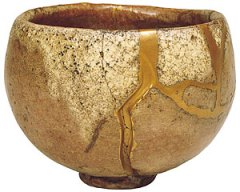
Song - Japanese Bowl - Peter Mayer


I’m like one of those Japanese bowls
That were made long ago
I have some cracks in me
They have been filled with gold

That’s what they used back then
04_03
When they had a bowl to mend
It did not hide the cracks
It made them shine instead

So now every old scar shows
from every time I broke
And anyone’s eyes can see
I’m not what I used to be

But in a collector’s mind
All of these jagged lines
Make me more beautiful
And worth a higher price

I’m like one of those Japanese bowls
I was made long ago
I have some cracks you can see
See how they shine of gold.

Quote by Australian activist Christine Caine

 "Sometimes when you're in a dark place, you think you've been buried, but actually, you've been planted."


Wintered Over (Poem) by Lisa Breger


Water carries sunlight along a narrow twisting stream;

sunlight glitters on the water’s back

light among dark trees.

I watch a hawk in the distance glide the thermals


rise and circle the open space over Lake Cochituate.

Soon it will be lilac season

among other kindnesses.

To have weathered this harsh winter


didn’t take courage or strength

though the lilacs are hardy

and the season brings forth.

How can I have nothing to say about this;


a survivor always has a story.

Maybe you just keep on living

even when the odds are against you.

A nurse brings a saucer of milk to your lips


and the cat in you,

how many lives now,

takes a swallow.

Then, you lift a hand and take her hand,


another sip,

and lift yourself up

which is what I remember.

Transplanted stem cells find their way back to the marrow.


I was neither strong nor brave.

I stayed in bed and looked out the window.

Some days the old oaks across the way swayed in the wind other

days: stillness and birds.


I don’t know why I made it.

Don’t we all have a fierce desire

to see a hummingbird

drink from the trumpet vine?


Saturday, November 14, 2020

Poem - Heavy - Mary Oliver


That time
I thought I could not
go any closer to grief
without dying

I went closer,
and I did not die.
Surely God
had his hand in this,

as well as friends.
Still, I was bent,
and my laughter,
as the poet said,

was nowhere to be found.
Then said my friend Daniel,
(brave even among lions),
“It’s not the weight you carry

but how you carry it –
books, bricks, grief –
it’s all in the way
you embrace it, balance it, carry it

when you cannot, and would not,
put it down.”
So I went practicing.
Have you noticed?

Have you heard
the laughter
that comes, now and again,
out of my startled mouth?

How I linger
to admire, admire, admire
the things of this world
that are kind, and maybe

also troubled –
roses in the wind,
the sea geese on the steep waves,
a love
to which there is no reply?

Sunday, November 08, 2020

Resilient - Rising Appalachia (song)


Poem - from "A Brave and Startling Truth" - Maya Angelou


We, this people, on this small and drifting planet
Whose hands can strike with such abandon
That in a twinkling, life is sapped from the living
Yet those same hands can touch with such healing, irresistible tenderness
That the haughty neck is happy to bow
And the proud back is glad to bend
Out of such chaos, of such contradiction
We learn that we are neither devils nor divines

Poem - MY GOD, IT’S FULL OF STARS (PART 5) - Tracy K. Smith


When my father worked on the Hubble Telescope, he said
They operated like surgeons: scrubbed and sheathed
In papery green, the room a clean cold, a bright white.

He’d read Larry Niven at home, and drink scotch on the rocks,
His eyes exhausted and pink. These were the Raegan years,
When we lived with our finger on The Button and struggled

To view our enemies as children. My father spent whole seasons
Bowing before the oracle-eye, hungry for what it would find.
His face lit up whenever anyone asked, and his arms would rise

As if he were weightless, perfectly at ease in the never-ending
Night of space. On the ground, we tied postcards to balloons
For peace. Prince Charles married Lady Di. Rock Hudson died.

We learned new words for things. The decade changed.

The first few pictures came back blurred, and I felt ashamed
For all the cheerful engineers, my father and his tribe. The second time,
The optics jibed. We saw to the edge of all there is —

So brutal and alive it seemed to comprehend us back.

Poem - ODE TO BUTTONING AND UNBUTTONING MY SHIRT - Ross Gay


No one knew or at least
I didn’t know
they knew
what the thin disks
threaded here
on my shirt
might give me
in terms of joy
this is not something to be taken lightly
the gift
of buttoning one’s shirt
slowly
top to bottom
or bottom
to top or sometimes
the buttons
will be on the other
side and
I am a woman
that morning
slipping the glass
through its slot
I tread
differently that day
or some of it
anyway
my conversations
are different
and the car bomb slicing the air
and the people in it
for a quarter mile
and the honeybee’s
legs furred with pollen
mean another
thing to me
than on the other days
which too have
been drizzled in this
simplest of joys
in this world
of spaceships and subatomic
this and that
two maybe three
times a day
some days
I have the distinct pleasure
of slowly untethering
the one side
from the other
which is like unbuckling
a stack of vertebrae
with delicacy
for I must only use
the tips
of my fingers
with which I will
one day close
my mother’s eyes
this is as delicate
as we can be
in this life
practicing
like this
giving the raft of our hands
to the clumsy spider
and blowing soft until she
lifts her damp heft and
crawls off
we practice like this
pushing the seed into the earth
like this first
in the morning
then at night
we practice
sliding the bones home.

Anger - David Whyte

 Loving Brainpicking today!

Poet and Philosopher David Whyte on Anger, Forgiveness, and What Maturity Really Means

ANGER is the deepest form of compassion, for another, for the world, for the self, for a life, for the body, for a family and for all our ideals, all vulnerable and all, possibly about to be hurt. Stripped of physical imprisonment and violent reaction, anger is the purest form of care, the internal living flame of anger always illuminates what we belong to, what we wish to protect and what we are willing to hazard ourselves for. What we usually call anger is only what is left of its essence when we are overwhelmed by its accompanying vulnerability, when it reaches the lost surface of our mind or our body’s incapacity to hold it, or when it touches the limits of our understanding. What we name as anger is actually only the incoherent physical incapacity to sustain this deep form of care in our outer daily life; the unwillingness to be large enough and generous enough to hold what we love helplessly in our bodies or our mind with the clarity and breadth of our whole being.

...

What we have named as anger on the surface is the violent outer response to our own inner powerlessness, a powerlessness connected to such a profound sense of rawness and care that it can find no proper outer body or identity or voice, or way of life to hold it. What we call anger is often simply the unwillingness to live the full measure of our fears or of our not knowing, in the face of our love for a wife, in the depth of our caring for a son, in our wanting the best, in the face of simply being alive and loving those with whom we live.

Our anger breaks to the surface most often through our feeling there is something profoundly wrong with this powerlessness and vulnerability… Anger in its pure state is the measure of the way we are implicated in the world and made vulnerable through love in all its specifics.
...

Anger truly felt at its center is the essential living flame of being fully alive and fully here; it is a quality to be followed to its source, to be prized, to be tended, and an invitation to finding a way to bring that source fully into the world through making the mind clearer and more generous, the heart more compassionate and the body larger and strong enough to hold it. What we call anger on the surface only serves to define its true underlying quality by being a complete but absolute mirror-opposite of its true internal essence.


...

To forgive is to put oneself in a larger gravitational field of experience than the one that first seemed to hurt us. We reimagine ourselves in the light of our maturity and we reimagine the past in the light of our new identity, we allow ourselves to be gifted by a story larger than the story that first hurt us and left us bereft.

Poem - The Weighing - Jane Hirschfield


So few grains of happiness
measured against all the dark
and still the scales balance.

The world asks of us
only the strength we have and we give it.
Then it asks more, and we give it.

Wednesday, November 04, 2020

Day after the 2020 Presidential Election in 2020

 What's the right metaphor? Oil and water. Knit and perl? We are made from the same cloth, yet in taking shape for one, we shape the other. We face opposite worlds and so come to opposite conclusions. America is just; America is just racist.

I want to ask each Trump voter, when you were alone in a voting booth made for you, and you went to cast your secret ballot, between you and the outcome you wanted, what was your vote FOR? What did you cast your vote AGAINST?  What did you fear would happen, is happening? What do you see that you want more of? More COVID deaths? More kids in cages? More lunatic rants via Twitter? More countries to see us and despair, form their own coalitions to save the globe? More emptying of the federal coffers into Trump golf properties?

When the pollster asked who you would vote for, why couldn't you bring yourself to say "Trump" out loud? Did you go to his rallies? Did you listen? What did you hear that you liked? That made you feel safe? That said, "this guy should lead our country for 4 more years!"

Lines from H.D.'s Eurydice: 

what was it you saw in my face?
the light of your own face,

the fire of your own presence?
....

So for your arrogance
and your ruthlessness
I have lost the earth
and the flowers of the earth,
and the live souls above the earth,
and you who passed across the light
and reached
ruthless;

you who have your own light,
who are to yourself a presence,
who need no presence;

yet for all your arrogance
and your glance,
I tell you this:

such loss is no loss,
such terror, such coils and strands and pitfalls
of blackness,
such terror
is no loss;

hell is no worse than your earth
above the earth,
hell is no worse,
no, nor your flowers
nor your veins of light
nor your presence,
a loss;

my hell is no worse than yours
though you pass among the flowers and speak
with the spirits above earth.

Against the black
I have more fervour
than you in all the splendour of that place,
against the blackness
and the stark grey
I have more light;

and the flowers,
if I should tell you,
you would turn from your own fit paths
toward hell,
turn again and glance back
and I would sink into a place
even more terrible than this.

At least I have the flowers of myself,
and my thoughts, no god
can take that;
I have the fervour of myself for a presence
and my own spirit for light;

and my spirit with its loss
knows this;
though small against the black,
small against the formless rocks,
hell must break before I am lost;

before I am lost,
hell must open like a red rose
for the dead to pass.


And Robinson Jeffers - The Answer


 What is there to hold onto when half of us won't admit what we want or face the consequences of our vote? 

I am reading Isabel Wilkerson's Caste, and the research linking Nazi Germany during the Third Reich with their legal model - the Jim Crow era South is truly terrifying. How did Germany recover when so many participated and so many let it happen? There will be no Nuremberg trials here. No calling to account. No fleeing of war criminals to Venezuela. Trump will make and lose another $400 million. And Tweet the whole time about hate and unfair treatment - of him and his cronies. He'll be lionized as the worst-treated president of time. Poor him. 

And we're left to ... what? Try to cobble together a coalition of the not-quite-terrible. The turnable. The ones who will only admit it was about the economy but say they never liked what Trump said in his worst moments. 

I hope we ask more questions of the people who supported or propped up or voted for or just held their nose for this despicable, petty despot. I want to understand. I'm listening for common ground. For hope. For shared values. For shared fears, even. For something that resembles a thought that I might have on a tough day or after a few dozen tough years. 

These are Hillbilly Ellegy people. Saying that no one else should get bootstraps until they've made it out of the coalmine. I don't want to join them there. Or leave them there. Or leave anyone there. 

The canary's dead. Let's all make our way into the light. It will take some time to get us all up in the lift. We'll take turns, and you can send water and food down with each return trip. Let's sing together as we wait. Who knows this one? I'm gonna keep on moving forward...

Saturday, October 24, 2020

V'ahavta (poem) by Aurora Levins Morales


Full poem here.


Say these words when you lie down and when you rise up,
when you go out and when you return. In times of mourning
and in times of joy. ...
[R]ecite them in your sleep, here in the cruel shadow of empire:
Another world is possible.

Thus spoke the prophet Roque Dalton:
All together they have more death than we,
but all together, we have more life than they.

...So instead,

imagine winning. This is your sacred task.
This is your power. ...
Lean with all your being towards that day
when the poor of the world shake down a rain of good fortune
out of the heavy clouds, and justice rolls down like waters.

Defend the world in which we win as if it were your child.
It is your child.
Defend it as if it were your lover.
It is your lover.

...

Don’t waver. Don’t let despair sink its sharp teeth
Into the throat with which you sing. Escalate your dreams.
Make them burn so fiercely that you can follow them down
any dark alleyway of history and not lose your way.
...

Hold hands. Share water. Keep imagining.
So that we, and the children of our children’s children
may live

A Small Needful Fact (poem) by Ross Gay


Is that Eric Garner worked
for some time for the Parks and Rec.
Horticultural Department, which means,
perhaps, that with his very large hands,
perhaps, in all likelihood,
he put gently into the earth
some plants which, most likely,
some of them, in all likelihood,
continue to grow, continue
to do what such plants do, like house
and feed small and necessary creatures,
like being pleasant to touch and smell,
like converting sunlight
into food, like making it easier
for us to breathe.

Copyright © 2015 by Ross Gay. Reprinted from Split This Rock’s The Quarry: A Social Justice Poetry Database.

"this freedom, this liberty, this beautiful and terrible thing, needful to man as air"

Song - Keep on Moving Forward/Sigamos Adelante - Emma's Revolution


Sunday, October 18, 2020

Poem - The Sound of One Fork - Minnie Bruce Pratt


Through the window screen I can see an angle of grey roof
and the silence that spreads in the branches of the pecan tree
as the sun goes down. I am waiting for a lover. I am alone
in a solitude that vibrates like the cicada in hot midmorning,
that waits like the lobed sassafras leaf just before
its dark green turns into red, that waits
like the honeybee in the mouth of the purple lobelia.

While I wait, I can hear the random clink of one fork
against a plate. The woman next door is eating supper
alone. She is sixty, perhaps, and for many years
has eaten by herself the tomatoes, the corn
and okra that she grows in her backyard garden.
Her small metallic sound persists, as quiet almost
as the windless silence, persists like the steady
random click of a redbird cracking a few
more seeds before the sun gets too low.
She does not hurry, she does not linger.

Her younger neighbors think that she is lonely.
But I know what sufficiency she may possess.
I know what can be gathered from year to year,
gathered from what is near to hand, as I do
elderberries that bend in damp thickets by the road,
gathered and preserved, jars and jars shining
in rows of claret red, made at times with help,
a friend or a lover, but consumed long after,
long after they are gone and I sit
alone at the kitchen table.

And when I sit in the last heat of Sunday, afternoons
on the porch steps in the acid breath of the boxwoods,
I also know desolation. The week is over, the coming night
will not lift. I am exhausted from making each day.
My family, my children live in other states,
the women I love in other towns. I would rather be here
than with them in the old ways, but when all that’s left
of the sunset is the red reflection underneath the clouds,
when I get up and come in to fix supper,
in the darkened kitchen I am often lonely for them.

In the morning and the evening we are by ourselves,
the woman next door and I. Still, we persist.
I open the drawer to get out the silverware.
She goes to her garden to pull weeds and pick
the crookneck squash that turn yellow with late summer.
I walk down to the pond in the morning to watch
and wait for the blue heron who comes at first light
to feed on minnows that swim through her shadow in the water.
She stays until the day grows so bright
that she cannot endure it and leaves with her hunger unsatisfied.
She bows her wings and slowly lifts into flight,
grey and slate blue against a paler sky.
I know she will come back. I see the light create
a russet curve of land on the farther bank,
where the wild rice bends heavy and ripe
under the first blackbirds. I know
she will come back. I see the light curve
in the fall and rise of her wing.

Visitation (Poem) by Mark Doty

When I heard he had entered the harbor,
and circled the wharf for days,
I expected the worst: shallow water,

confusion, some accident to bring
the young humpback to grief.
Don't they depend on a compass

lodged in the salt-flooded folds
of the brain, some delicate
musical mechanism to navigate

their true course? How many ways,
in our century's late iron hours,
might we have led him to disaster?

That, in those days, was how
I'd come to see the world:
dark upon dark, any sense

of spirit an embattled flame
sparked against wind-driven rain
till pain snuffed it out. I thought,

This is what experience gives us ,
and I moved carefully through my life
while I waited. . . Enough,

it wasn't that way at all. The whale
—exuberant, proud maybe, playful,
like the early music of Beethoven—

cruised the footings for smelts
clustered near the pylons
in mercury flocks. He

(do I have the gender right?)
would negotiate the rusty hulls
of the Portuguese fishing boats

—Holy Infant, Little Marie—
with what could only be read
as pleasure, coming close

then diving, trailing on the surface
big spreading circles
until he'd breach, thrilling us

with the release of pressured breath,
and the bulk of his sleek young head
—a wet black leather sofa

already barnacled with ghostly lice—
and his elegant and unlikely mouth,
and the marvelous afterthought of the flukes,

and the way his broad flippers
resembled a pair of clownish gloves
or puppet hands, looming greenish white

beneath the bay's clouded sheen.
When he had consumed his pleasure
of the shimmering swarm, his pleasure, perhaps,

in his own admired performance,
he swam out the harbor mouth,
into the Atlantic. And though grief

has seemed to me itself a dim,
salt suspension in which I've moved,
blind thing, day by day,

through the wreckage, barely aware
of what I stumbled toward, even I
couldn't help but look

at the way this immense figure
graces the dark medium,
and shines so: heaviness

which is no burden to itself.
What did you think, that joy
was some slight thing?

Saturday, October 17, 2020

Poem - Blessings for the Beginning - Kari Kopnick


The things to do have been done, well, for the most part.
The people we need are in place, almost.
We are ready, or as ready as we will be.

Bless this most perfectly imperfect beginning.
May we find the right people to do the right things as we go.
May we discover that what we needed was right here all along.
And may we remember to stop and marvel at the magic of each moment as it floats by.

Wednesday, October 07, 2020

 Weird thing. 

My family traveled to Umeå, Sweden a year ago for a memorial for my husband's mother.

The kids, then 10 and 6, did great. But every time we passed McDonald's the call of "home" was almost undeniable.

We ate there for the first time in Stockholm, and I was thrilled to see a "Chicken and Hummus Salad" on the menu, as well as sparking water! I ate better at a McDonald's than ever before or ever since.


The salad features hummus and grilled chicken alongside black rice, edamame, and green and red cabbage. To finish off the dish, the salad is drizzled with a sweet and tangy chili dressing.

The next time the kids wanted to hit Mickey D's, they got a big YES from me.

Little did I know that I should have said yes even more than I did. I figured Sweden just got to "test" the salad until they rolled it out in the U.S. But no! Now I know McDonald's offers different menu items all over the world!

And I'm left mourning for a tasty, budget-friendly salad from a restaurant that my kids love, too.

Such a strange thing to be craving McDonald's!

As an aside, I think not only would I consider this McDonald's item as a factor in my decision to go back to Sweden, but ... it may just drive my tourism destinations in other areas.

Check out the Cadbury Creme Egg McFlurry, available only in Canada and Australia, and only at Easter:


Come on, big arches! Bring me joy in my home town!!!

Monday, October 05, 2020

Barrett died this week. He went to see his doctor because he just wasn't feeling himself, and his heart stopped on the examining table. They brought him back with a defibrillator in the ambulance.

He got a pacemaker and says he's eager for more life.

I'm 45 and barely know why I wake up every day.

I know these are not the days to measure our worth or gauge the meaning of our lives.

I am keeping my kids safe and sane and loved. I am keeping a house running. And a team at work. And helping with church.

But.

All the shoulds press so insistently, and the years of regret I am forecasting when I see how little I make of my days now. 

"Trust in the laws of accretion," Barrett said more than 20 years ago to me. And I have very little writing to show for it. Baudelaire may have called it better. I am a product of ennui. Barely dragging myself through the days and then anesthetizing myself once in bed with bad tv, a game or two, some news.

I read some. I love some. I exercise some.

I know I should do more. I feel so empty, so drained, so exhausted. Maybe I am doing all I can.

What is the most loving thing to do for myself? Forgive and let languish or push and produce?

I would love Barrett as much even if he never wrote a poem. I would adore Rini just as much if she never picked up a brush. And for years, she didn't. 

A career was plenty for many people. Why do I want a whole other life? Ah, there's the rub.