Monday, April 23, 2007

Back Bending

“A life develops in spirals: It always passes through the same points, but at different levels of integration and complexity.” – Jean-Paul Sartre, Critique de la Raison Dialectique, 1960


At 31
adulthood bends me backward
with a flexibility
born of a strong spine
open to fun
stitched to vertebrae
ground with work,
buffered by acceptance,
flowing in joints
connecting me to what happens
loosely.

My cells gather themselves taller,
brace for mini-me’s needing support
that grow in my imagination
in the space love makes,
illuminating a path toward life
through my belly
even as all of me sees death
coming slowly
and begins the readiness
to say goodbye.

My hands
lining themselves up
itch between the balance
to grasp, to work, to knead,
to let go,
doing each
in turn.

Love arches in my bed,
rolls out in the kitchen,
looking exactly and nothing like
the shadow pictures in my sharp-cornered
childhood room.

Time flattens me
until my understanding
looks like a line
even though it extends
in an infinite plane.

Everywhere I go feels directional from here
although more likely I circle myself,
circumscribed in Sartre's tilting spiral of life –
sometimes climbing up,
often sliding down,
backbending the whole way

as I slinky myself to that cool, calm lake
where life ends
and memory begins –
time’s thickness approaches forever
and I am suspended,
remembering.

Wednesday, April 11, 2007

Passover - Lynn Unger

They thought they were safe
that spring night when they daubed
the doorways with sacrificial blood.
To be sure, the angel of death
passed them over, but for what?

Forty years in the desert
without a home without a bed
following new laws to an unknown land.
Easier to have died in Egypt
or stayed there a slave, pretending
there was safety in the old familiar.

But the promise, from those first
naked days outside the garden,
is that there is no safety,
only the terrible blessing
of the journey. You were born
through a doorway marked in blood.
We are, all of us, passed over,
brushed in the night by terrible wings.

Ask that fierce presence,
whose imagination you hold.
God did not promise that we shall live,
but that we might, at last, glimpse the stars,
brilliant in the night sky.

Friday, March 23, 2007

Comings

Life heats up again, and now it's about words and how they string together to spell community.

On the burner are books -- compiling books, editing, choosing the order of paper. A Voces teen poetry 5-year anthology, a 15-year Slam poetry anthology, a 2-poet chap book. Floating in the back of my head, settling to the bottom of my to-do list, my own book of boys. A closing chapter, one might say, before closing myself off to new boys. Maybe it's just me, but how does one publish poems about old boys when one's first married? Maybe after twenty-five years, it would be refreshing to return to your past. I can see an old married ladies collection. How quaint. How vital she still is!

But a bride? Such a slut. What a mistake! What's she regretting, anyway? These guys sound awful.

Ah, the mantle of bridedom settles close in the night.

This bride shit is getting old, and I'm not even close yet! It's seriously distasteful, and all I can do is push against the tide and try to make this thing something I would still choose to participate in. I've checked, and he's okay living in sin. There's that option. Elope still sounds deliciously simple until one checks the hangover factor. Years, they say.

Between those two stones -- books and weddings -- life slips like sand.

If only days were as long as they once were. I grew lifetimes in the summer. Now? The year comes in two bite-size chunks: Days getting longer, days getting shorter. Everything between? All relative.

Friday, March 09, 2007

From Childhood to Here

It was a time when solitude grew on me

grew me

like the breeze blows on seedlings

kindling them skyward.

The sadness weighed me

adding wisdom not yet lived

acceptance of grief not yet given.

It was breaking,

the way earth pushes through chickenwire

the way crème brule offers itself to the tongue

the way lovers are coaxed open

the way wise men are pried from their families.

I knew then this stillness

that I’ve found again in faith

in the courage to feel everything

ripen under my witness

to feel sad and grounded and broken

all at once

and know I am home

that I am here to greet me

that I never left

yet know more now

having been away.

Thursday, March 01, 2007

Commitment Sunday

Forgive me the repetition, but I wanted to post the "pulpit editorial" [oh boy...] I gave last Sunday. It was a hit. I have to say that writing it was easy. It seemed to have a circular structutre that rang true to me. When I was practicing it, it started to seem thin. I was pretty worried! There was so much that I wasn't saying (even though it was way longer than it was supposed to be!).

I read it during both services, and the 9:30 service is much more reserved and traditional than the 11 am. I got laughs (which I was going for) at the later service, but Christine assured me she saw some people wiping some tears away during first service, too, so I guess that's good.

I want to post it here to honor the bravery I could muster to say any of this at all -- to myself not to mention to the whole church.

I'm very much wondering where I'm going in my life at the moment. It feels like there are a lot of big things in motion -- glacial shift, I like to tell myself. Pick a continent or be ready to stretch into the splits... There's work movement and poetry community movement (thanks to those supporters there to see me read TWICE this month -- crazy -- after not having read at a public poetry event in, well, fourteen YEARS) and personal movement (thanks, by the way, to my crazy heart-friends who just presented me with the Anti-Bride Planner). I feel like I'm preparing for something... who knows what ... but something big and good.

So here it is in its entirety.


Christine asked me to share with you today the story of my finding this church and making myself a home here. It’s a long story, so I hope you’ll bear with me through the twists and the turns.

When I was little, I used to sit at my window, watching the rain and feeling myself filled with the overwhelming beauty of the world. My little cup runneth over, and I cried and cried with the aching power I felt in witnessing and connecting to … well … everything. Looking back, I realize that was my own kind of meditation. I did it a lot.

At the time, there was plenty to cry about – the usual family griefs, being an American in the 20th century – namely divorce & family financial stress. Maybe I was crying about those things, but what I remember about those moments is feeling simultaneously bigger than myself – elevated above my personal worries – and suitably small – recognizing the importance of being that single witness in that particular time.

I went to church a lot as a little girl. Always the over-achiever, I liked going to school even on the weekends, and there was something compelling about the stories, even though I didn’t believe them to be literally true. When my family stopped attending, I went with friends and neighbors. My sister remembers me begging my mother to take me.

When I was twelve or thirteen, a family friend asked me about my faith. I told him what I believed – that everything in the universe is connected through energy, almost as if every particle were an instrument that together formed sections within the universal symphony playing time. I thought it was a beautiful description; he said it wasn’t faith at all – it was science – and that I didn’t believe in God. I never knew that was an option!

As I was approaching the teenage years, I embraced it with a passion that mortified my non-church going family when I announced to all of Albuquerque that I was an atheist in response to a reporter’s question about a lawsuit barring the invocation at my high school graduation. My family still brings that up. In my own defense, it was true at the time, and I was siding with freedom from persecution and the separation of church and state! (See – latent UU even then!)

I stayed an atheist a long time, but an atheist who believed fervently in the power of community, the transcendence of connection through language, and in the beauty of quantum physics. I pretty much gave up the idea of ever finding myself comfortable in a church again.

Then my sister had children. Her husband’s family is Christian and were quite sad that their grandchildren would grow up without a religious community. Maybe it wasn’t what they had in mind, but my sister decided to bring them here, for the religious education. She was pretty surprised, I think, when she started learning as much as the girls from attending church. She kept telling me about these amazing sermons by Christine. We’d talk about them for hours. I knew I had to check this out.

I was not prepared for the visceral shock of going to church – how familiar it would be and how different: The singing, the silence buzzing among us during meditation, the compassion and acceptance that underscored every word. I kept waiting to hear the things I would disagree with. This was church, after all. But they never came. Instead, I felt broken open time and again, feeling the power of connection that feels a lot like faith. When my sister and I sit together on Sundays, we can’t stop looking at each other, checking to see if the other one is crying, too.

My exploration of belief keeps getting broader the longer I’m here, and for a girl who went to college to learn everything about everything – and then stayed there for 13 years trying to do just that … it’s a blessing I can hardly believe.

I’m telling you this because I think the story itself is enough. But there is more. Two weeks ago, I signed the book and became a member after attending church here for over four years. It was so hard to join a church – even one I agree with as much as this one. But this community, this church, the work that we do together – in the RE program where I’m helping these fabulous mid-high students, the social action group, our ministry that keeps getting bigger and bigger – is important enough to me that I’m pledging part of my fledgling career salary to help support it. I can’t thank you enough for helping to support me. And to my sister, who’s been there for so much for so long, I say: thank you for giving me back the memory of my faith. It’s been a long time gone.

Wednesday, January 24, 2007

Space-time Jello Joy

Since the universe
wriggles like space-time jello,


we two carrot sticks
puddle somewhere in the vicinity of Mars,


meeting on the marshmallow
called North America.


The earth streaks backward/below/before us
as our pickup carrot sticks cross in AD 2006,


random as atoms smashing
like party cocktail glasses for a good toast.


We agree
after months of squirming around Albuquerque


to braid futures,
entwine our nows.


If you hold the universe in your hand
all ice-block frozen,


you see us only as blur,
all of our moments fuzzed into an unclear picture


or perhaps only one
harmonized buzz.


What will feel like years to us
won’t even bubble air in that spacetime block.


Our dance of experiences shared and unshared
will only look like our lives


when you zoom in close,
layered with invisible emotions


that show up as color,
or perhaps as song


accompanying the visual light
of molecules vibrating themselves


to connect forward and backward
in space, in time.


What my mind loves is taking the tour
again and again


from disconnection –
singular perception –


to connection –
there is no space, all is fabric –


from small – we are molecules –
to large – all is all –


knowing now,
experiencing later,


treasuring always,
forward and backward in time,


this dance
with you,


my carrot stick
tasting a lot like joy.

Tuesday, December 19, 2006

Growth & Changes

I've been silent for a while.

Lots of internal and external changes that I wanted to sit quietly and feel. Sometimes it feels like ice melting. Sometimes it feels like a kaleidoscope shift of ice patterns. Either way, I believe beauty has grown in me, and it's a little startling.

The thaw began with graduating from school after 30 years. Then falling in love. Then opening myself to faith (of sorts). Then entering into an engagement. All life changing events. All in the last 6 months.

This thing, this pairing, this delicate seed of happiness and a future together has been a quiet miracle that unfolds a little more every day. I've hesitated to tell people. Part of that is knowing that what it means to me will be lost in the translation, and in that crack can enter all kinds of assumptions and judgments that I don't yet want to hear.

Part of that is having time to deal with my own overwhelming fears regarding marriage -- what commitments mean and whether I am actually capable of intimacy over the long haul, regardless of the fact that it's always been what I've wanted. Wanting and ability are two very different things. I've got a lot of baggage about marriage from my own family, from what our society tells us the confines of that designation are, etc.

While much of these fears have grown quieter over the last few weeks, the one that's still roaring in my ears is resistance to the hierarchy of love. What I don't like about marriage is the sense that this relationship suddenly has primacy above all others. That assumption justifies the atomic family's isolation in a suburban home. This is not what I want. It's one reason why I'm adamant about keeping my current living arrangement of sharing a house with a dear friend, living close to my sister, spending multiple evenings with other friends.

Even so, I feel the bond between Eric & I solidifying, stabilizing ... which really just means that I'm coming to trust its reality, its permanency, its gravity. Maybe at some point, I will come to terms with a relationship of 2+ in every situation. Maybe there's safety there, maybe love, maybe even freedom. I don't know. At the moment, I'm still holding out for other possibilities.

Thankfully, there are months and months before a ceremony making this connection even more real. By the time laws are involved, I hope my uneasiness has been resolved in me. Until then, I grow, and the seed continues to sprout.

Monday, November 20, 2006

Rilke's Book of Hours: Love Poems to God

Oh my.

I've found the poet that fuses physics and spirituality in an intricate dance. I'm so infused with spirit, I think this is what people call conversion. Terrifying and so unbelievably beautiful.

Rilke denounces a personified god and instead talks to the universe. He sees human beings as the great witnesses to beauty -- celebrating and loving all that exists. In that sense, we are creators -- touching things with life so they can be seen. Heisenberg would agree; we touch all that exists when we witness it, and both are changed. Rilke says it better.

The hour is striking so close above me,
so clear and sharp,
that all my sense ring with it.
I feel it now: there's a power in me
to grasp and give shape to my world.

I know that nothing has ever been real
without my beholding it.
All becoming has needed me.
My looking ripens things
and they come toward me, to meet and be met.
If you accept that the entire universe is connected in the way that particles witness each other when they interact, then the totality of that universe becomes whole in a way that some would call God. This feeling of connection and being bound inextricably to all that exists is what others would call love.

God speaks to each of us as he makes us,
then walks with us silently out of the night.

These are the words we dimly hear:

You, sent out beyond your recall,
go to the limits of your longing.
Embody me.

Flare up like flame
and make big shadows I can move in.

Let everything happen to you: beauty and terror.
Just keep going. No feeling is final.
Don't let yourself lose me.

Nearby is the country they call life.
You will know it by its seriousness.

Give me your hand.

Sunday, November 12, 2006

Naming God

Having come full circle on "going to church," I find myself trying again to name the thing that I'm once again admitting to myself as spiritual belief.

I used to love going to church as a kid. My family was Episcopalian, and I enjoyed the somber ceremony and formal beauty of our services. For a while. Then I just really liked being somewhere as a family where we couldn't fight. And Mom always had Breathsavers wintergreen when we just couldn't sit still. For the most part, we kids were ushered off to Sunday School -- they weren't kidding when they called it that. We had lessons to do and worksheets to fill out, and after completing each one, you put a star on this little chart showing your progress. As a compulsive overachiever -- I learned a lot in a short amount of time. I had to! We were incredibly intermittent church goers, and more often than not, I had to dig up my folder from a separate box, where they put all the little-used folders of all the kids whose families didn't come all that often. Very embarrassing. I don't remember interacting with anyone, but I still loved learning all the stories of the bible.

Then when my parents got divorced, neither one would go back to the church. Too embarrassing, I guess. My father stayed episcopalian until his new church decided they wanted to be bigoted and separated from that denomination in order to keep out gays. My mother turned to New Ageism. She's now a curandera and a white witch -- subtle distinction to be sure, but it's there. When she planned to miss the birth of her first grandchild, she instructed my sister to squeeze a crystal that she'd infused with her good energy whenever my sister needed her. (Needless to say, that crystal never made it in the room.)

I begged to go to church with friends and neighbors. For quite a while I attended a Presbyterian church. I liked the optimism and good cheer, but I was always a little suspicious -- where were people with dark sides? Certainly I couldn't fit in here, coming as I did from a broken home with secrets. And the emphasis on Jesus was a bit much. I never really thought he was a personal friend. Still, there was a tape of songs about God that I loved, and I remember singing one at night and crying because it was all so beautiful -- this whole world and our being here to love it.

Then an adult friend of the family told me once that I didn't believe in God because I only believed in the universe and energy. I accepted that I was an athiest for years, especially because as a teenager, I wanted as much distance from those happy fanatics as I could get, going so far as to announce on tv at my high school graduation that I didn't believe in God. I didn't think it was a big deal, but I found out quickly how theistic my non-church-going family really was.

Now, I go to the UU church, and I find myself tearing up almost every Sunday at the power of people coming together in a spirt of support and hope. UUs are realists; we talk dark side. We talk politics; we talk war. And so I search for books and sources of inspiration and sustenance to grow this little spiritual side of mine. I haven't found much that moves me. The affirmations and sermons provide the most steady stream of soul food. Being a scholar, though, I want the printed word.

Christine challenged us to create our own book of revelations, a compendium of readings that speak to us -- nurture, calm, inspire, console, and sustain. That seems daunting, so instead I'm going to compile the names for this "god" of mine that can sum up or shed light on what it is I do believe, if it's not a personified being.
  • impulse toward love and growth
  • powers of healing
  • spirit of peace
  • place of sustenance
  • community of the wakeful
In this space of indirection, I'm thankful for the time to hear my breath and listen for a soul.

Song of Hope and Despair -- Norbert Capek

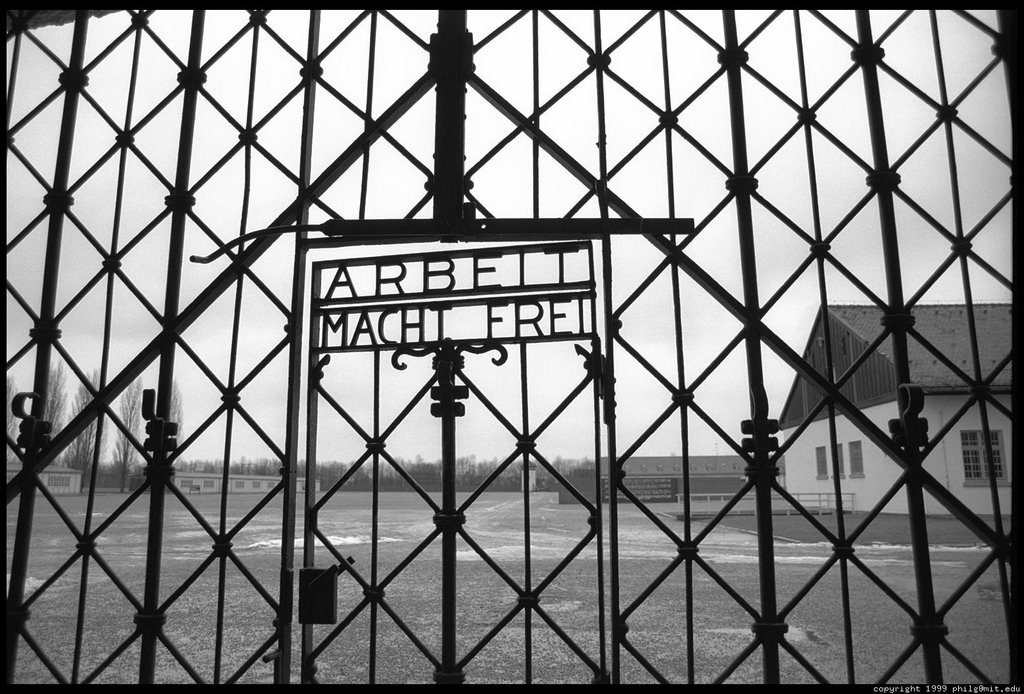
Now a popular hymn, this poem, "Mother Spirit, Father Spirit" was written by a Czech minister after he was taken by the Gestapo to a death camp in World War II. He died in Dachau in 1942.

You can hear the melody here. It's haunting. Quite literally. The same minister invented a yearly celebration of life and renewal used in many UU churches -- the Flower Communion.

Mother Spirit, Father Spirit, where are you?
In the sky song, in the forest, sounds your cry.
What to give you, what to call you, what am I?

Many drops are in the ocean, deep and wide.
Sunlight bounces off the ripples to the sky.
What to give you, what to call you, who am I?

I am empty, time flies from me; what is time?
Dreams eternal, fears infernal haunt my heart.
What to give you, what to call you, what am I?

Mother Spirit, Father Spirit, take our hearts.
Take our breath and let our voices sing our parts.
Take our hands and let us work to shape our art.

This is my song -- Lloyd Stone (1934)

This is my song, o God of all the nations,
A song of peace for lands afar and mine.
This is my home, the country where my heart is;
Here are my hopes, my dreams, my sacred shrine.
But other hearts in other lands are beating,
With hopes and dreams as true and high as mine.

My country's skies are bluer than the ocean,
And sunlight beams on cloverleaf and pine.
But other lands have sunlight too and clover,
And skies are everywhere as blue as mine.
Oh hear my song, o God of all the nations,
A song of peace for their land and for mine.


Hear a beautiful a cappella version here.


Monday, November 06, 2006

Letters to a Young Poet -- Rilke

I forget how much wisdom is out there to remember. From his amazing Letters to a Young Poet, the ever-wise Rilke:

[H]ave patience with everything unresolved in your heart and to try to love the questions themselves as if they were locked rooms or books written in a very foreign language. Don't search for the answers, which could not be given to you now, because you would not be able to live them. And the point is, to live everything. Live the questions now. Perhaps then, someday far in the future, you will gradually, without even noticing it, live your way into the answer.

A Religious Iconoclast's Melancholy Recollections of Childhood -- Michael Meyerhofer

Courtesy Lisa (thank you!):

How would it have been for us
had they who taught the universe
every bleary Sunday morning
included with Hebrews and Acts
the lost Gospel of Thomas,
the death poetry of Zen monks,
Einstein's theory of relativity?

How would it have been to see
women in the same robes as men,
preaching philosophy alongside
those same fearful cliches of hell-
to know Jesus as olive-skinned
with hair like thick black thread,
a boy who suckled and liked it?

How would it have been to touch
the common chalice of our bodies
and feel without reproach the blood
roaring inside us like boiled wine,
to know God as wind and the atom,
to accept a universe that swells
and contracts like a beating heart?

How easy it would be to believe
that all our terrible doubts are born
from hearing only half the story,
that they in an inexcusable madness
rob or ignore what they cannot
understand-- that if we had it all,

we'd actually be closer to home.

Thursday, November 02, 2006

Teeth: Exposed, Decaying Bone

Several trips to the dentist to replace a crown, and I'm left spinning thinking about teeth.

Bones protruding from our fleshy gums. Washed with bacteria. Crevices hiding all manner of gunk.

Devices for tearing at other animals' flesh. And chomping plants.

And smiling.

The opening quote from the Secret Lives of Dentists sums this up perfectly:

Teeth outlast everything.
Death is nothing to a tooth.
Hundreds of years in acidic soil just keep teeth clean.
A fire that burns away everything else, hair and skin...
even bones, leaves your teeth dazzling.
Open.
Life is what destroys teeth.

Wednesday, November 01, 2006

When do transitions end?

I'm underwater in another life-transition stage.

But suddenly I feel like I'm always saying that. It's a perpetual state, and I'm starting to understand ... it's life. And it's a fatal condition.

I cannot believe the pace with which the weeks and months fly by, even as I curse the slow-ticking clock some days at work. Viktor Frankl, holocaust survivor and author of Man's Search for Meaning, describes the same phenomenon for camp victims. The days lasted eternities, but the months flew by.

Not that my life is in any way comparable to that ultimate horror, but the human perception does have similarities across time.

Monday, October 09, 2006

What's Rational

“As we act, let us not become the evil we deplore.” -- Congresswoman Barbara Lee, in voting against the resolution for war in Iraq

Friday, September 29, 2006

Thirsting for the Spiritual

Having come to the end (for now) of my academic quest, I'm finding myself thirsty these days for spiritual stories. There's a deadness or a dryness or a distance that I'm trying to spark back to life. It feels cyclical and maybe chemical, in the way that you need different things at different points of your life.

So, an atheist most of my life, I find myself deeply involved in the First Unitarian Church here in Albuquerque. The truth is that as a kid, I loved going to church. I'm a community junky but somewhat of an introvert, so the structured interaction paired with some degree of enforced anonymity (because not many people are who they REALLY are in church -- you're just your Sunday church self!) always felt really good and really safe to me. The only thing I didn't like was hearing so many things I didn't agree with -- things about god or sin or obedience or judgment...

So imagine my surprise and elation when attending the UU church for the first time and hearing messages of social justice, individual reason, support of diverse beliefs. Almost every time I go, I find myself weeping because something said taps this hollow place inside where the fullness of spiritual communion -- with people of peace from all over the world -- should be.

This Sunday, Christine will talk about a UU minister during WWII who risked everything to help Jewish refugees in Prague escape from the Holocaust.

Sunday, October 1
"Love Will Guide Us"
The Rev. Christine Robinson

In the years before World Wart II, a Unitarian minister and his wife traveled to Prague to help the Unitarians there deal with refugees from the developing Holocaust. The Israeli government honored them this year as among the "Righteous of the Nations." I was honored to be present at the ceremony in Washington, D.C., last month, and will reflect on these two heroes and what their story has to say for us in these days.


Click here to read the story from the Washington Post.

There's a dearth of sources for good stories these days: occasional news items, Democracy Now, good friends, some literature, and now, for me, the occasional sermon. I'm happy to have one more place to go to feel full and supported and free to think, feel, and begin to understand. Overwhelmingly, the message is one of hope -- for peace, for acceptance, for tolerance -- despite a resolute acknowledgement of all that we face in the world today. I need that.

Thursday, September 21, 2006

Change

From a beautiful sermon (9/10/06) by Rev. Christine Robinson of First Unitarian Church:

When you embrace change as the not-always-easy fundamental of life, you are aligning your energy with reality, and that in turn will not only make things flow more easily for you, but will give profound meaning to even the most painful changes you will encounter.

Much of the pain of change is self-inflicted. It’s caused, not by the change itself, but by our reaction to change. It’s caused by denial and resistance, how we stiffen up and harden our attitudes as we face change, rather than mustering our curiosity, softening our wills, and embracing the new.
...
All that resistance we put up to just making the change that we need to make suggests that we’re not really ready and are not taking care of ourselves in the midst of change. And how do we do that?

Whole books have been written on this subject, but here are three important strategies that have a spiritual bent to them. They are:
  • acknowledge your losses and deal gently with whatever in you feels it is losing,
  • be appreciative and show your appreciations, and
  • keep what you value and believe uppermost.

There’s huge wisdom in the comment that most of us spell the word “change” L-O-S-S, and it often surprises me as I talk to people during times of change in their lives how reluctant they are to acknowledge what they have lost and to let themselves feel the pain. Instead, they often beat up on themselves for “living in the past” or “wallowing in sadness,” or, alternatively, and men are particularly good at this, for channeling their feelings of loss, which they find unacceptable, into actions of anger.

But it is OK to feel loss. We are hard-wired to hang on tight to the things we think will keep us safe and happy…to love what is mortal and hold it to our bones as if our lives depended on it, as Mary Oliver says. We don’t need to go through the trauma of change beating ourselves up for feeling bad. Usually our grief is like a little toddler who tugs on your pants for attention over and over again until you think you’ll go crazy…but if you just bend down and pay her a little bit of attention, she’ll be soothed and go on her way. Ignore her, though, and there’s hell to pay in the end.

Secondly, be appreciative and share your appreciations. When we’re stressed out, this doesn’t come naturally to us; we often have to do it by discipline. It’s worth it though. Voicing our appreciations gets us out of ourselves, if only for a moment, puts us in a better frame of mind, influences people to be of assistance to us and even, believe it or not, research shows this, puts endorphins in our system and helps us to be more effective in dealing with stress.

One thing I did while on sabbatical was attend training sessions to equip me to debrief people after traumas and disasters, something that I’ve meant to do ever since 9/11. As a part of that training, we listened to the dialogue between air traffic controllers and the pilot of a plane that had lost its controlling mechanisms. We then watched the plane land, and then crash; about 200 people died in that crash. That was disaster debriefer training boot camp. One of the things I most vividly remember about that experience is that, as the pilot approached the runway, knowing that a crash was likely, he said to the air traffic controller, with just a little catch in his voice, “Thank you for your help. You did the best you could.”


Now, this might seem to you like a breathtaking display of spiritual maturity…a pilot, facing the most unwelcome possible set of changes in what had been a routine day’s work, in the midst of bringing every ounce of training and skill he had, stopped to thank those who had done all they could.

The pilot survived that crash. Due, no doubt, to all that skill and training, and to the physics of the impact, but perhaps also in some small part because of the endorphins of gratitude and ability to relax into all that was his life in that terrible moment.
...
Thirdly, know, as you struggle with your chosen or unchosen change, that when you soften your attitude and let yourself go with the flow that is all that is your life, you are aligning yourself with the great force at the heart of things, which we call by many names. ..

[M]y theology tells me that the great powers of healing and renewal…hear those words about change…the forces that fuel the great radiance that was at the beginning of time and space, the most basic, fundamental reality we can ever know is alive with change. And when we relax into the changes that are required of us, we’re not just living ploddingly effective lives; we are partaking of and swimming in the reality of realities.
...
God is the mess itself, the evolution, the shove we get to grow, more like the exquisite beauty of trees growing through seasons and loosing their seeds to grow in new places other than the perfect statue of a tree, solid, pure, and never changing. God is more like the dying person who learns, at last, to say thank you and really mean it, the new parent who says goodbye to childless freedom and embraces the responsibility of growing another human being, the man who inventories his life and decides to give up the demon drink, the victim who makes the best of her life in spite of her oppressions and uses what she learned to help others. That’s God’s work in the world. Even more radical, that’s God’s being in the world. In creation with the rest of us, moving slowly and with plenty of losses and reverses, toward greater love, gratitude, and
understanding of mystery.

So. That unwelcome change that I need to make? I’ll still grieve my losses, soothe my inner child, and mope a bit. I’ll still count my blessings and focus on my strengths and move on into all that is my life. And I’ll do it with a sense, not of fighting off my faults or being on a hopeless journey toward perfection, but of simply being a pilgrim on life’s path, deeply participating in the precious mystery at the heart of the universe…that change is perpetually in the air, that it is what brings us not only delight, but growth in spirit, and that that is not just the condition of our life, but its very meaning.

Monday, September 18, 2006

Gospel (poem) by Philip Levine

The new grass rising in the hills, 
the cows loitering in the morning chill, 
a dozen or more old browns hidden 
in the shadows of the cottonwoods 
beside the stream bed. I go higher 
to where the road gives up and there’s 
only a faint path strewn with lupine 
between the mountain oaks. I don’t 
ask myself what I’m looking for. 
I didn’t come for answers 
to a place like this, I came to walk 
on the earth, still cold, still silent. 
Still ungiving, I’ve said to myself, 
although it greets me with last year’s 
dead thistles and this year’s 
hard spines, early-blooming 
wild onions, the curling remains 
of spider’s cloth. What did I bring 
to the dance? In my back pocket 
a crushed letter from a woman
I’ve never met bearing bad news 
I can do nothing about. So I wander 
these woods half sightless while 
a west wind picks up in the trees 
clustered above. The pines make 
a music like no other, rising and 
falling like a distant surf at night 
that calms the darkness before 
first light. “Soughing” we call it, from 
Old English, no less. How weightless 
words are when nothing will do. 

 – from, Breath, 2006

Friday, September 01, 2006

More Confessions of a Self-Help Girl

Okay, so I found myself having one of "those" conversations this week.

You know, the one where you find yourself spewing self-help garbage. (Because, let's face it, it works!)

One of my go-to books on relationships is the really embarrassingly cheesy Unimaginable Life by (wait for it...) Kenny and Julia Loggins, which, it turns out, is even more unimaginable than the authors originally claimed, as they are now DIVORCED as of 2004, a shocking little tidbit that I missed somehow in the last 2 years.

When the book (and album) came out, there was quite the media blitz in certain New Age circles. At first, just because one of the authors is ... b-music famous. And then, because it's one of THE most honest books I've read about relationships. Written by BOTH partners. Chronicling their individual AND partner trajectories. A lot of the book is taken straight from their journals, and you wince at times about their honesty, even in really ugly moments of fear and loathing.

This couple goes through a LOT. They were married for 14 years. They fought for their intimacy; they fought for their health. When they married, they promised to follow their paths even if that meant supporting each other to leave to find healing somewhere else.

And that's how it happened (at least publicly).

NOTHING on this in New Age circles. I'm DYING for a book or article or ANYTHING from either one of them (Kenny's pouty quotes during his recent reunion tour with Messina are NOT satisfying and only raise more questions, if not eyebrows).

Where's Julia's public statement? Where's Kenny's whiny tell-all?

Whatever happened to heart-blasted open honesty?

And yes, this panic is definitely about me and answering the "what if" question that we all have about love. What happens if the perfect relationship goes bad?

Where do you go? Clearly, this couple says, you go quiet (relatively). Okay, Kenny did release a new album, complete with sappy "I miss you" songs. No, really! One of the songs really is called "I miss us" or some damn thing. But that tells us very little, really.

One of Kenny's horrifying newspaper quotes is how great it was to reverse roles with his son and cry on his shoulder. If you've read the book, you know this is one of the things he loved best about Julia, how she played mommy to his hurt little-boy self. I'm thinking, dude is 52. Why not try just being the adult? Maybe Julia was exhausted being mommy to all 4 of their kids and Kenny, too. Being mommy is just not sexy, unless you're a pedophile.

This brings me to an argument I had with a man who I'd just met. He started the conversation warning the four women in the room that we were to acknowledge right-off that he was being brave to talk to us being the only man present, and he didn't want to get stabbed (or something deadly like that). He said it was ridiculous for women to expect maturity in men in relationships because men have never been taught how to be in relationship, in the way little girls are. He said, (and oh boy do I quote):

"Men are like retarded children. You wouldn't get mad at a retarded child for not knowing how to act. You have to be patient and teach them."


We didn't buy it, and I summed it up this way.

"Okay, but I don't want to have sex with a retarded child!"

For those of us who believe in non-traditional relationships, in trying to follow our connections, there is very little out there about what happens when THOSE end. The ending of abusive relationships is well-covered ground. Does that mean that healthy relationships are easier to walk away from and don't warrant comment? I don't think so! The hardest I've ever cried in my life (almost) was deciding to walk away from a fairly functional relationship that I just knew wasn't going to sustain us both. So painful!

I hope that if I were to 1) have the guts to write about my good and healthy relationship that I would also have the decency to 2) write about how it ended, if and when it does.

We need those stories, too. Even those of us who don't sleep with retarded children.